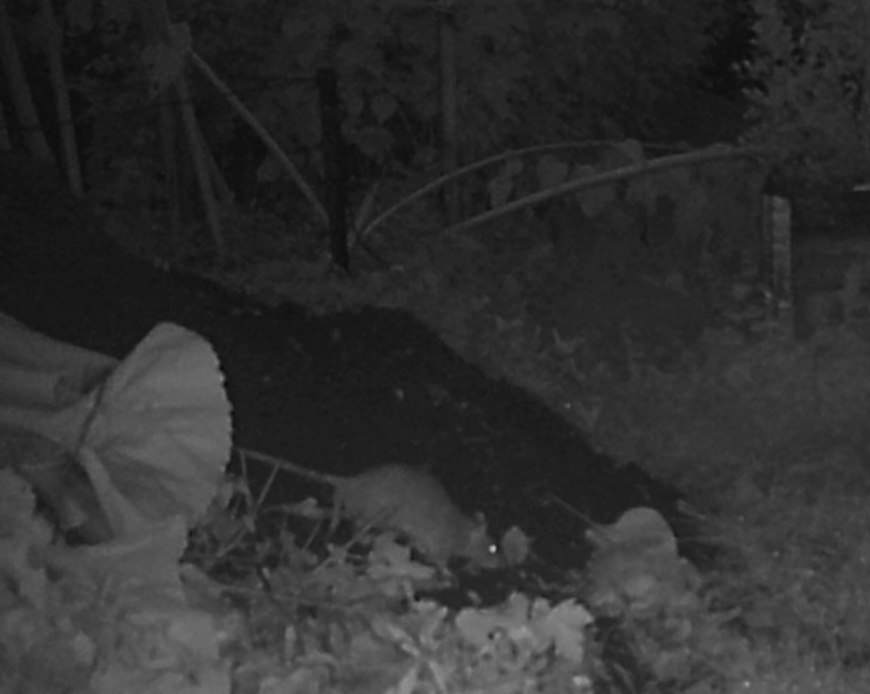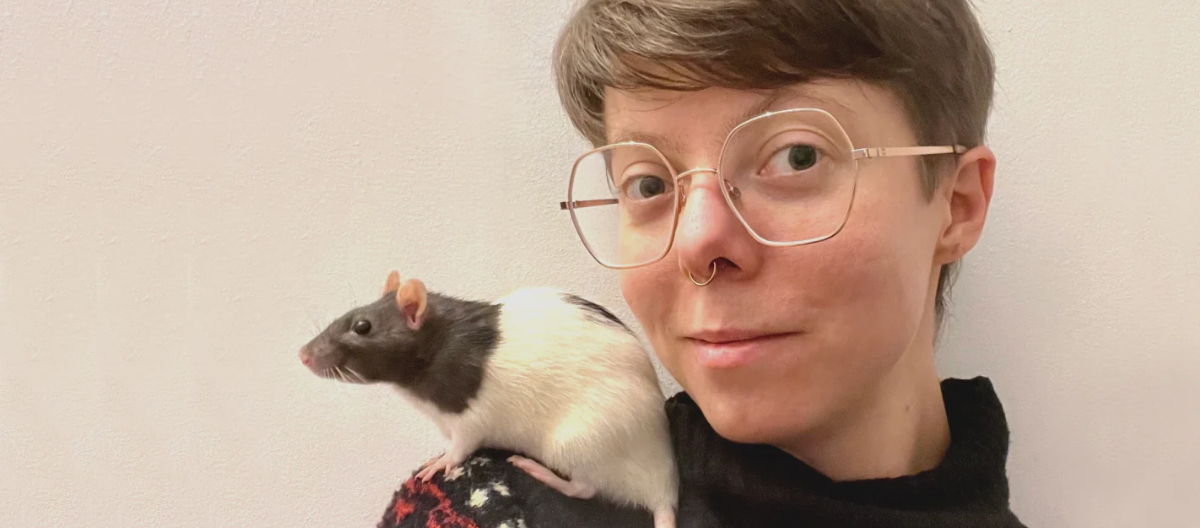
When humans encounter rats in spaces both species want to inhabit, strong emotions can arise. Our grantee Karolina Lukasik’s postdoc research in urban allotment gardens offers valuable lessons on how we can live alongside other species. In this blog post, Lukasik shares her experiences from the midst of the “rat wars”.
TEXT AND PHOTOS: Karolina Lukasik
In the spring of 2023, I started my postdoctoral project, “Living with the Other: the more-than-human conflicts in urban allotment gardens”, funded by the Nessling Foundation. Urban gardens are peculiar spaces: on one hand, they are where people deliberately put themselves in close contact with nonhuman nature, and often spend substantial money and effort to do so. On the other, not all nonhuman nature is welcome in those gardens—there are plants classified as weeds or invasive species, fungi that can destroy trees, and animals coming to eat the seedlings or the fruit.
Beneath the idyllic facade (which, as any gardener will tell you, is underpinned by back-breaking work), the gardens are conflict zones. But a conflict can reach a resolution—if you find out how to communicate with the other side. In the case of ground elder or rats, communication becomes tricky. But not impossible.
In my work, I interviewed the gardeners in two urban allotment gardens in Helsinki. After each interview, the gardeners and I would place trail cameras in the allotments. Throughout the gardening season, I would revisit the allotments, check on the cameras, and observe the garden life. The gardeners showed me incredible generosity and hospitality, sharing their stories and inviting me to garden celebrations. During my field work, I became attuned to the growth of plants and subtle changes in the weather (not that it saved me from being caught in the pouring rain on a few occasions). Once, a hedgehog tried to bite me to scare me off their allotment territory. The gardens and their residents—human and nonhuman alike—surprised me, time and again.
The Rat Highway
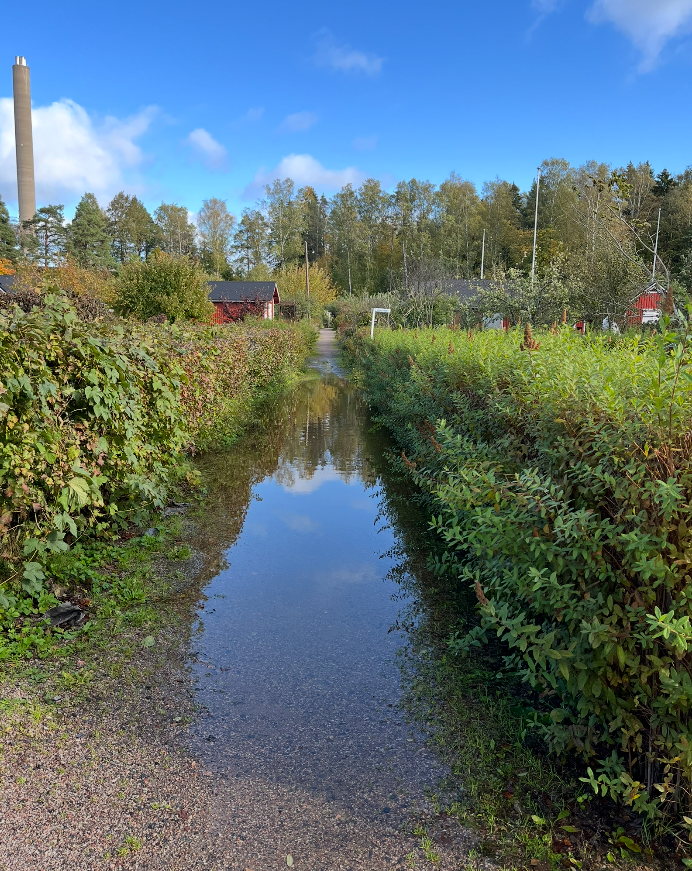
During the interviews, many of the respondents mentioned a “rat crisis” or a “rat war” that began with major construction work near the gardens. The rats, fleeing the noise and destruction of their nesting sites, found their way into the allotment gardens, where food was abundant. Of course, there have always been rats in the gardens; rats, as synanthropic animals, follow us humans pretty much wherever we go. But suddenly the rats became much more visible to the gardeners, and instead of keeping to the edges, they frequented human spaces such as the barbecue areas or the garden alleys. One alley was even nicknamed the “rat highway”.
When a commonly disliked animal, associated with filth and disease, seems to take over one’s cherished space, it creates feelings of fear or even hate, a sense of losing control. Pushing back to regain control is an understandable impulse. The gardeners’ first idea was to use lethal means: rat traps, either distributed by a pest management company or by the gardeners themselves. However, not everyone supported the traps or participated in placing them in the gardens.
Of rats and men
In the end, the traps didn’t yield the results the gardeners had hoped for. The rats had not disappeared. Amidst the increasing tension, the garden boards decided to invite the disease ecologist Tuomas Aivelo to give a talk about urban rats and alleviate the fears.
Aivelo told us that rats are quite like us: a social, curious, adaptable species. Thanks to these similarities, they are so successful in living alongside us. They eat the same food as we do, and they make nests in our buildings. We hardly praise them for this. Rather, we cast them as cunning villains skulking in the dark, ready to infect us. But we also see them as the messengers of moral decay and “social contagion”—as if rat presence in a certain space marked the humans as lazy and dirty. This idea has been around since the 19th century and even though the presence of rats says nothing about people’s moral character, it is difficult to give up this way of thinking and the fear of being judged that it brings.
After the talk, the garden boards required the gardeners to use compost boxes that could be securely closed, and to surround the garden cottages with a wire mesh. In addition to that, some people refrained from feeding birds or hedgehogs. For the rats, these decisions meant that food and safe nesting sites wouldn’t be so easily available anymore. This discouragement was more successful than the traps. The rats became a rarer sight in the gardens—perhaps also because at this point they had learned the human habits. They would keep to the unused plots, the edges of the garden, and the hours where few humans were around. The rat war ended with a truce.
Multispecies negotiation
I view the events in the gardens through the lens of ecosemiotics: multispecies communication, and in this case, multispecies negotiation. Consider putting a mesh around your prized plants. It is an implicit message to the animals, a way to say “I don’t want you near my plants”. But a rat (or other animal) might attempt to negotiate this barrier by climbing over it or gnawing through it to get to the plant. You could build a stronger barrier or just let it be and accept the fact that this year, you won’t have as many crops from your garden. (Of course, if your livelihood depends on your crops, you might be less willing to capitulate.) An unprotected compost bin, or food left on the ground, is an invitation. A barrier is a sign to keep away.
We humans leave these messages to other species all the time, but we rarely realize we’re doing so. To complicate things further, as a community, we are inconsistent: one person might feed the neighbourhood birds while another will shoo them away. Frankly, having received such mixed messages, other species don’t know what to expect from individual humans. The garden truce was possible only after the gardeners decided on a unified course of action, consistent from plot to plot.
Whenever I talk with ecologists and conservationists, we agree on one thing: changing human behaviour is the hardest thing to do. But my work in urban allotment gardens gives me some hope. After all, if peace with animals as vilified as urban rats is possible, surely we can find ways of living with other species too.
Karolina Lukasik is a psychologist by training who has shifted her career towards multispecies research. She has studied conflicts among the residents of urban allotment gardens, both human and nonhuman. She holds a PhD in psychology from Åbo Akademi University and worked as a postdoctoral researcher at SWPS University in Warsaw on the project “Whom to trust? Cognitive determinants of learning from others”. She has also studied at the Schools of Ecopoetics, where she explored the history of laboratory rats.
Karolina is particularly interested in species we consider “pests” and is passionate about building biocentric, multispecies communities.